
Quick Summary
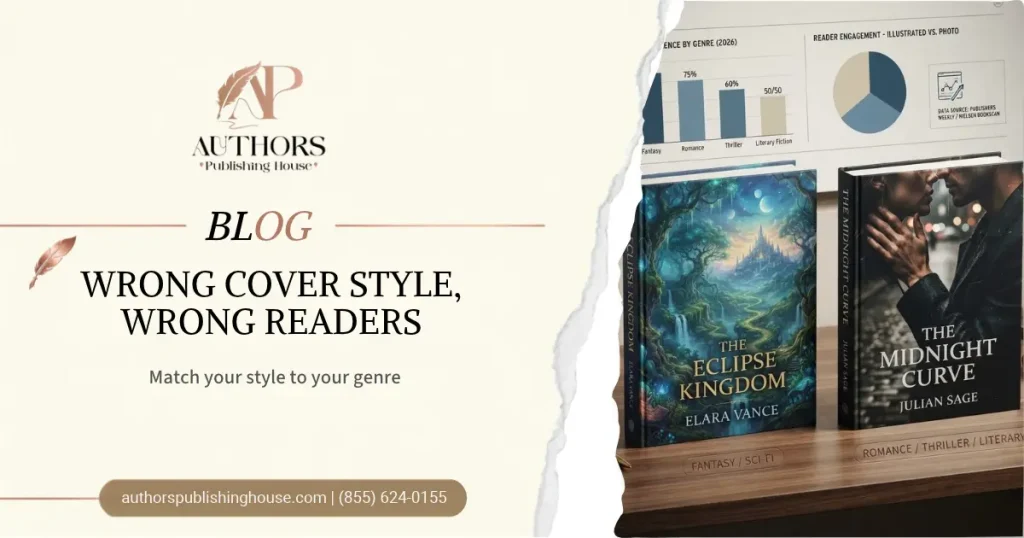
Illustrated covers dominate contemporary romance and romantasy, fantasy, and children’s books. Photographic covers still lead dark, steamy, mafia, and paranormal romance, and thrillers, though illustrated styles are growing in cozy mystery and psychological thrillers. An illustrated romance cover usually signals a lighter, funnier, contemporary story and caps the perceived heat level. A photographic cover signals intensity and realism. The biggest mistake is assuming illustrated works everywhere, since a cute drawn cover on a dark book makes readers feel misled. Study your subgenre’s top 20 before you decide.
Introduction
Illustrated vs photographic book covers is not a contest with one winner. In 2026, illustrated covers lead contemporary romance, romantasy, fantasy, and children’s books. Photographic covers still lead steamy and dark romance, mafia and paranormal romance, and most thrillers. The most reliable rule comes from designers who study bestseller lists. Match the dominant style of your own subgenre’s current top sellers, because a style that works in one shelf can hurt you in another.
One honest note before we start. No public study proves that one style outsells the other across all books. The evidence comes from bestseller analysis, designer shelf audits, and reader polls, and those sources sometimes disagree. This guide shows where they agree, where they conflict, and how to make the call for your book.
This guide is for authors choosing a cover style before they brief a designer. Use it when you are torn between an illustrated and a photographic direction, or when you suspect your current cover sends the wrong signal.
Illustrated vs Photographic Book Covers by Genre
Short answer: Each genre has a leading style, and the leader depends on the subgenre, not just the genre.
| Genre or Subgenre | Leading Style in 2026 | Do Sources Agree? |
| Contemporary romance and romcom | Illustrated, often a single figure, silhouette, or object | Mostly, though one shelf audit found photographic composites still dominate |
| Romantasy and fantasy romance | Illustrated or painterly, with symbolic objects like a sword, crown, or florals | Yes |
| Dark romance, mafia, cowboy, paranormal | Photographic, or moody object photography | Mostly yes |
| Fantasy and science fiction | Illustrated or painterly scenes | Yes |
| Thriller and mystery | Photographic, with illustrated gaining in cozy mystery and psychological thriller | Yes |
| Children’s books | Illustrated | Yes |
What Illustrated Covers Signal to Readers
Short answer: An illustrated cover tells readers the book is lighter, contemporary, and often funny, and it lowers the perceived heat level.
One 2026 designer analysis describes four signals that a cartoon style sends. It suggests comedy and banter, a contemporary setting, a capped heat level, and a younger perceived audience. That younger skew helps if you want crossover with the young adult shelf. It hurts if your readers are older and expect a classic couple cover. Illustration also carries a quality signal in some categories. As more bestsellers adopt illustrated covers, some designers say readers now link that style with deliberate, premium publishing. A drawn style with a consistent palette and lettering also makes book two instantly recognizable next to book one.
The style itself keeps changing. Flat vector cartoons are fading. Designers describe a move toward softer shading, painterly textures, more expressive faces, and warmer lighting.
Authors considering a custom illustrated design can browse these illustrated book cover examples to compare different illustration styles, color palettes, and visual treatments before briefing a designer.
What Photographic Covers Signal to Readers
Short answer: A photographic cover signals intensity, realism, and a higher heat level, which is why it still leads steamy, dark, and suspense stories.
In romance, photographic covers fit historical, dark, mafia, cowboy, and most paranormal subgenres. They deliver a promise that the story is serious or sensual. Designers advise two figures for a photographic romance cover, since readers want the promise of the relationship. A single model staring into the distance rarely works. Thrillers rely on photography to build tension and place the author’s name front and center. One rule applies to both styles. Do not mix them. Placing photographic figures on an illustrated background looks cheap.
Where the Evidence Conflicts
Short answer: Sources disagree on how far illustrated covers have taken over romance, and the gap comes from which shelf each source measured.
Several cover design guides say illustrated covers have dominated contemporary romance since around 2023. Yet one 2026 shelf audit of 273 romance covers found that drawn or crafted artwork led only a handful of them, and that the shelf stayed overwhelmingly photographic composite. A reader poll tells a third story. An informal Instagram poll by a romance author found that readers preferred cute illustrated covers and liked the photographic man chest style least. The same author notes that sales data suggests photographic covers still outperform most illustrated ones, especially among indie authors. That poll is informal, not scientific, but the gap between what readers say and what they buy is worth noticing.
These sources can all be right. Results change by subcategory, price tier, and whether you look at indie or traditional publishing. That is why the safest method is to audit your own shelf, not to follow a headline.
Cost: Illustrated vs Photographic Covers
Short answer: Illustrated covers usually cost more than photography based covers, since they require original artwork.
| Cover Approach | Typical 2026 Cost |
| Premade cover | $50 to $250 |
| Custom photography based cover | $150 to $600 |
| Illustrated or painted cover | $300 to $1,500 or more |
These romance focused ranges match the wider cost picture in our guide to the cost to design a book cover. Fully custom illustration often lands at $600 or more, while lower priced semi custom illustration can start nearer $300. One cover guide also notes that readers link illustrated covers with premium packaging, which can support higher paperback price points. Treat that as a designer’s view, not a guarantee of higher sales.
How to Choose Between Illustrated and Photographic
Follow this process before you commission anything.
- Name your exact subgenre, such as small town romcom, dark mafia romance, cozy mystery, or epic fantasy.
- Pull the top 20 bestsellers in that subgenre and count how many are illustrated and how many are photographic.
- Check the tone and heat level your cover promises. Make sure the style matches your story.
- Consider your reader’s age. Illustrated styles skew younger in perceived audience.
- Match your budget to the style. Illustration usually costs more.
- Test the cover at thumbnail size, as we explain in our guide to book cover mistakes self published authors make.
- If you write a series, pick a style you can repeat across every book.
Want a cover that matches your genre and your story? See our custom book cover design services.
Common Mistakes When Choosing a Cover Style
The most common mistake is assuming illustrated works for every book. Designers say this is a frequent error in 2026, and the cost shows up fast. A cute illustrated cover on a dark mafia romance makes readers bounce, and a mismatch can bring bad reviews from readers who expected a different story. A second mistake is mixing photographic figures with illustrated backgrounds. A third is copying the flat vector look after the trend moved toward painterly textures. A fourth is using AI generated character art without checking licensing and quality. Many indie authors now use these tools, so read the commercial terms carefully.
Frequently Asked Questions
Do illustrated covers sell better than photographic covers?
It depends on the subgenre. Illustrated covers lead contemporary romance, romantasy, fantasy, and children’s books, while photographic covers lead dark, steamy, and suspense stories. No public study proves one style wins everywhere.
Which romance subgenres still use photographic covers?
Dark romance, mafia, cowboy, paranormal, and steamy romance still lean photographic, according to several 2026 cover design guides.
Can a cute illustrated cover hurt a dark book?
Yes. Readers who expect a lighthearted romcom may feel misled by a dark story, which can lead to poor reviews and readers who bounce.
Are photographic covers still the norm for thrillers?
Yes. Photography still dominates thrillers, though illustrated covers are gaining ground in cozy mystery and psychological thriller.
Is an illustrated cover more expensive than a photographic cover?
Usually. Illustrated covers typically cost $300 to $1,500 or more, while custom photography based covers often cost $150 to $600.
Can I mix illustrated and photographic elements on one cover?
Designers advise against it. Placing photographic figures on an illustrated background tends to look cheap.
Conclusion
The illustrated vs photographic book covers question has no universal answer, but it has a reliable method. Illustrated covers lead romcom, romantasy, fantasy, and children’s books. Photographic covers still lead dark, steamy, and suspense stories, and most thrillers. Sources conflict on how far illustration has spread, so check the actual bestsellers in your subgenre before you commit. Choose the style that sends the right signal about tone and heat, test it at thumbnail size, and your cover will do its real job, which is to attract the right reader.
